
Hasbrouck Heights Local
Chimney Fan Installation in Hasbrouck Heights
Mechanical draft solutions for Bergen County homes with persistent smoke and airflow problems.
A Chimney Company You Can Trust
- Owner-operatedJohn Daraio
- 7Chimneyservices
- 50Townson the route
- Hasbrouck HeightsNJ · home base
Chimney Fan Installation
Chimney Fan Installation for Draft Problems
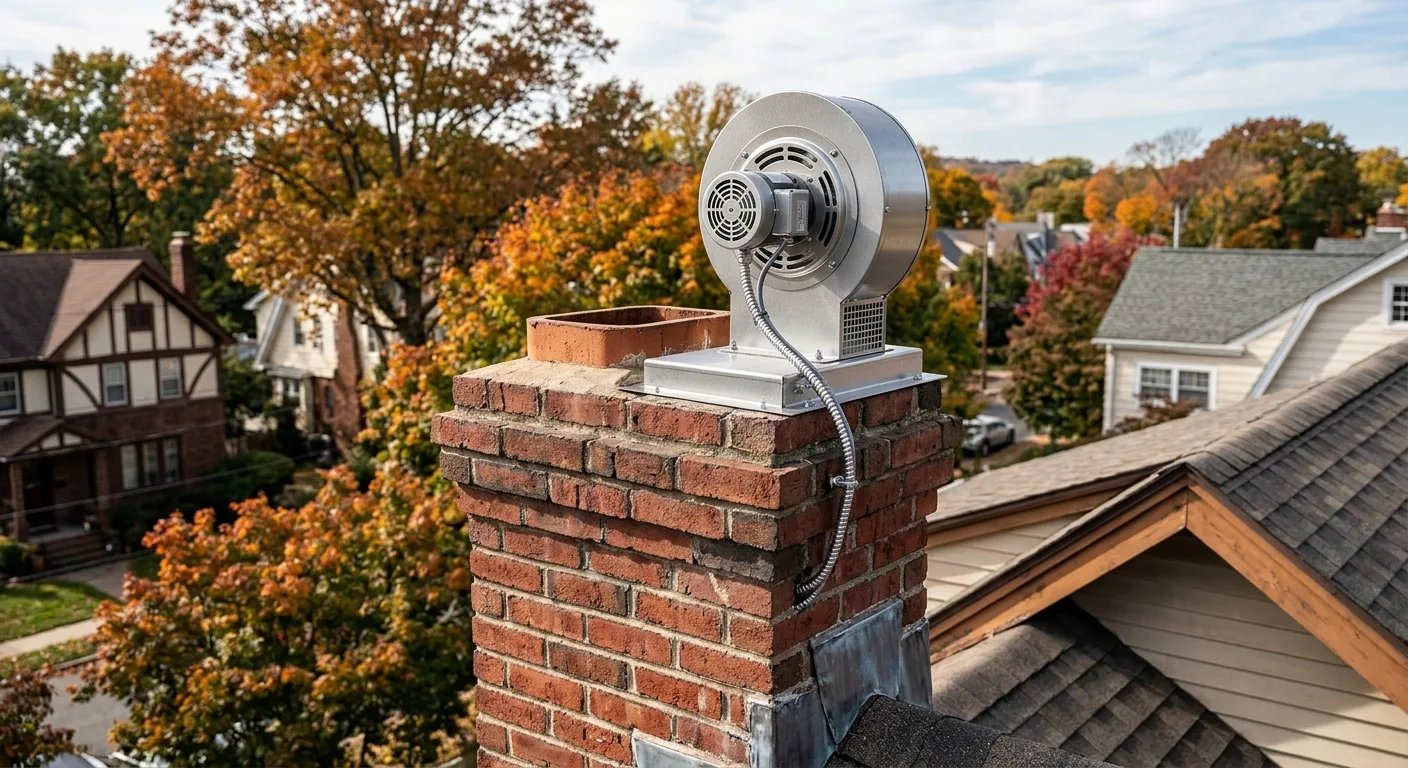
Chimney fan installation in Hasbrouck Heights is a service Apex Pro Chimney Solution performs for homeowners whose fireplaces smoke back into the living space, won't draw consistently, or suffer from pressure reversals that no amount of damper adjustment fixes. If your flue performs fine in some conditions and fails in others, the problem likely isn't your chimney's structure. It's your home's air pressure, and a powered chimney fan is often the right mechanical answer. Call John Daraio directly at (551) 755-0325 to talk through what's happening before committing to anything.
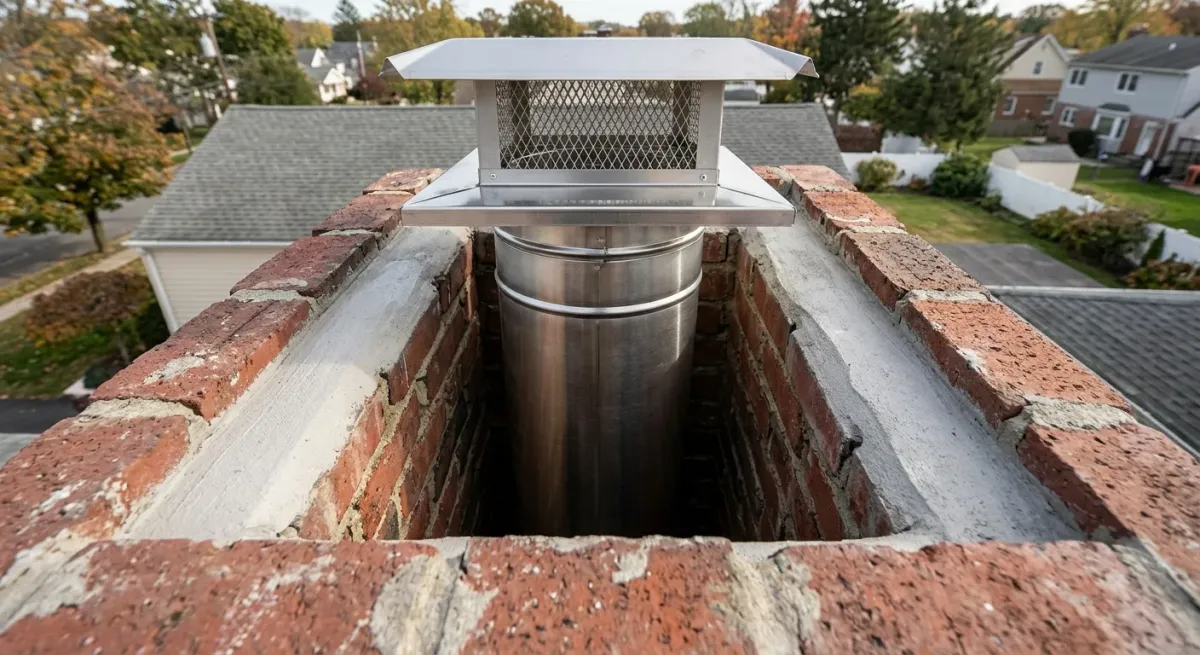
The installation process depends on what's causing the draft failure. A powered chimney fan mounts at the flue termination and creates continuous negative pressure inside the flue, pulling combustion gases up and out regardless of wind direction or interior air pressure changes. That's different from a damper, which simply opens and closes. It doesn't generate airflow. In Hasbrouck Heights and the surrounding Bergen County area, homes built in the 1950s and 1960s are the most frequent candidates.
Modern weatherization, replacement windows, and powerful kitchen or bathroom exhaust systems depressurize those houses to a degree the original chimney design never anticipated. The flue can't overcome that pressure differential on its own. Fan type, flue diameter, height, and existing termination hardware all affect scope. Every job is different, contact Apex Pro Chimney Solution for an accurate estimate.
Why Older Bergen County Homes Lose Draft
Tight houses and mid-century chimneys don't cooperate without mechanical help.
Most homes in Hasbrouck Heights were built when windows leaked, attics breathed freely, and interior air pressure was rarely a concern. The chimney drafted by physics alone: warm air rose, cold air replaced it from gaps throughout the structure. That equation changed as homeowners installed insulated windows, spray foam, and high-CFM kitchen exhaust fans over the decades. Now the house is effectively sealed, and every time that range hood runs, it pulls makeup air from whatever path offers least resistance.
Often, that path is down the flue. The result is smoke rolling into the living room when you open the firebox door, or a fire that burns sluggish and dirty regardless of how dry your wood is. A chimney downdraft repair evaluation is the right first step, and if the diagnosis points to sustained negative pressure rather than a structural defect, a powered fan is the correct fix.
Fan Types
Powered Roof Fans vs. In-Line Fans
The right unit depends on flue geometry, not preference.
Powered Roof-Mount Fans
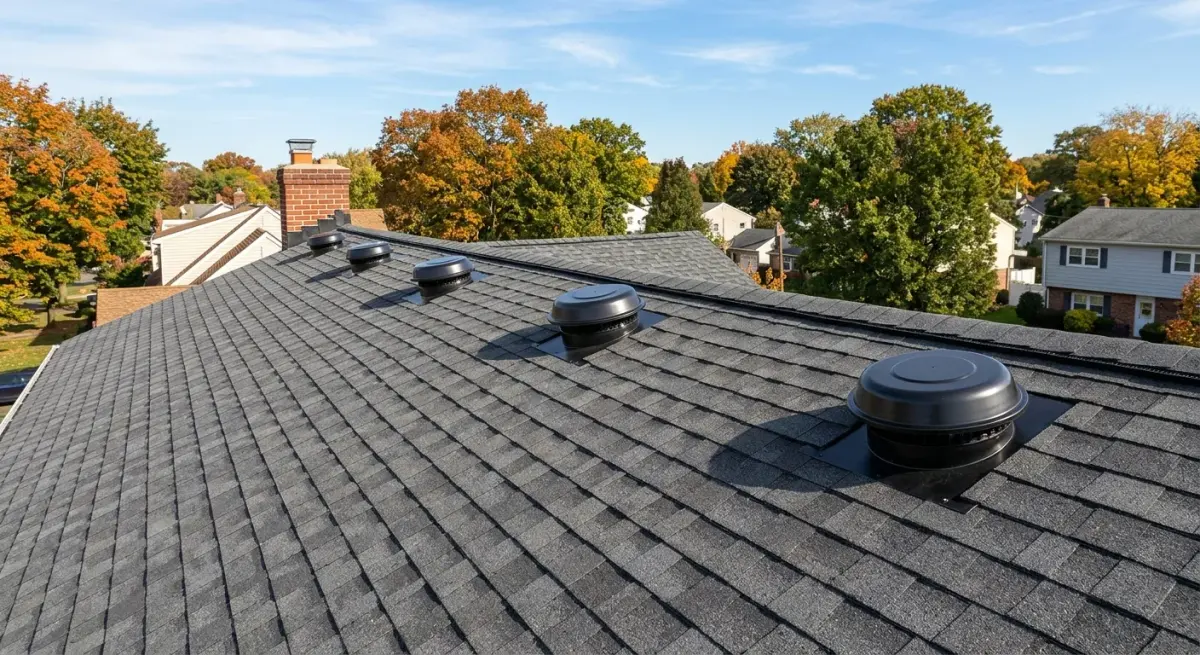
These mount at the flue cap and pull gases out from the top. They're the most common solution for masonry chimneys with a straight or mildly offset flue. The motor sits outside the thermal envelope, rated for weather and temperature extremes that northern New Jersey winters deliver reliably.
In-Line Draft Fans
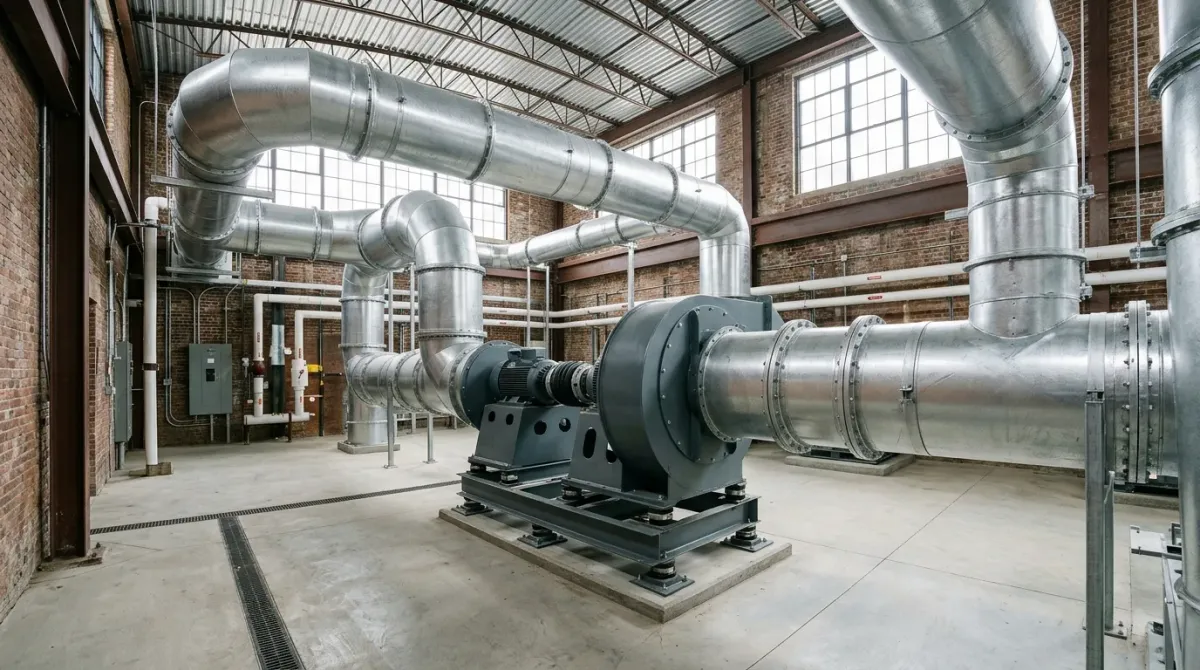
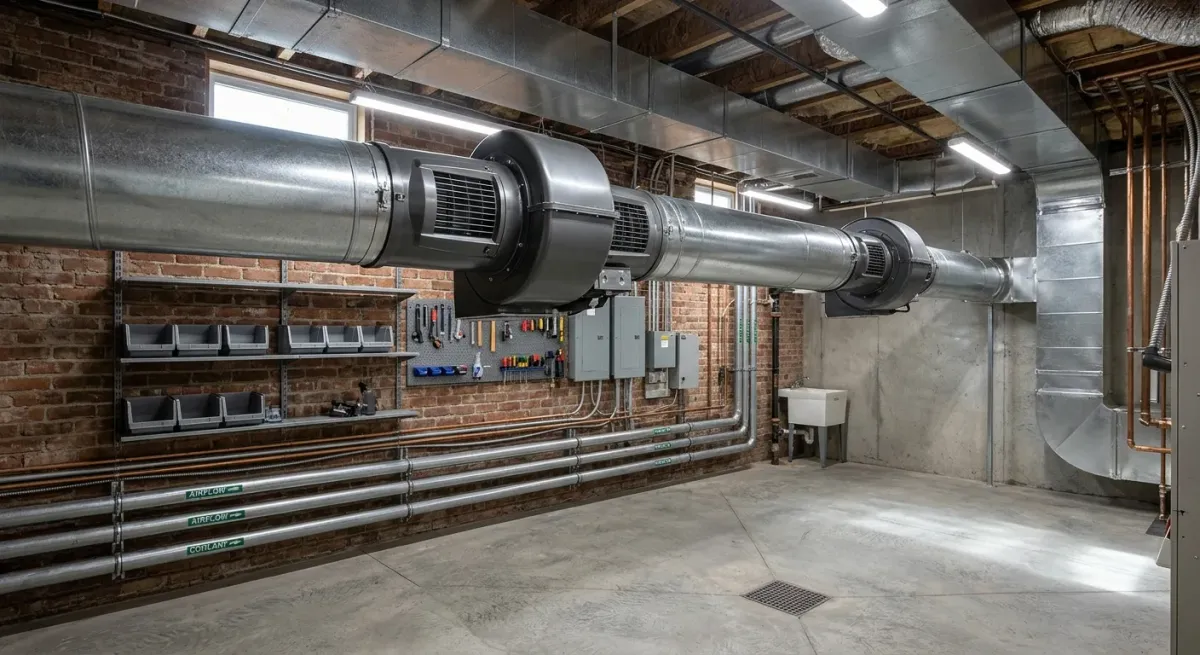
Installed inside the flue at a mid-point, in-line fans work where roof access is difficult or where the flue geometry requires boost at a specific location. They require more precise sizing and a clean, unobstructed liner section, which is why a chimney inspection comes first, every time.
Variable-Speed Controllers
Most quality fans include a wall-mounted speed controller that lets you match airflow to fire intensity. A low burn doesn't need full extraction force; running a fan at full speed on a small fire can actually cool the flue faster than you want. Proper calibration is part of the installation.
Integrated Cap and Fan Units
Several manufacturers combine the rain cap and fan into a single unit. For Bergen County homes that need both a cap replacement and draft assistance, these can reduce labor and provide a cleaner termination profile. They're not right for every flue opening, diameter and draft velocity have to be matched first.
Installation Process
What the Installation Actually Covers
No surprises on installation day. Here's the sequence we follow.
Draft Evaluation and Fan Sizing
Before any hardware goes on the roof, we assess flue height, diameter, current cap condition, and the pressure dynamics inside your home. Undersizing a fan leaves the problem unsolved. Oversizing creates excessive draw that can crack mortar joints over time. The evaluation drives the specification.
Flue and Liner Inspection
A fan mounted over a damaged or obstructed flue doesn't fix a draft problem, it pressurizes one. We inspect the liner condition before installation. If the flue needs a chimney cleaning or repair before the fan goes in, we'll tell you plainly. Some jobs require both.
Mounting, Wiring, and Calibration
The fan unit is secured to the flue termination or liner section, weatherproofed against freeze-thaw cycling, and wired to a dedicated circuit or the supplied controller. We test operation across speed settings with the fireplace active to confirm draw is consistent and the combustion zone is fully negative relative to the room.
Chimney Fans vs. Dampers: Know the Difference
This comes up on nearly every estimate call, so it's worth being direct: a damper controls airflow by opening and closing a physical plate. It does nothing to generate draft. A chimney fan creates mechanical negative pressure that actively pulls gases up the flue. If your damper is in good working order but your chimney still smokes back, the damper isn't the problem and replacing it won't help.
Conversely, if your damper is deteriorated and sealing poorly, that's a separate fix, often a top-mount damper or a chimney rain cap installation with an integrated seal. Some homes need both: a functional damper at the firebox and a powered fan at the crown to overcome persistent pressure imbalance. The evaluation tells you which.
What You Should Know About Permits in Bergen County
Electrical work and chimney modifications have local requirements, don't skip them.
Electrical Permits
Chimney fan installation involves a dedicated circuit or hardwired connection in most cases. Bergen County municipalities, including Hasbrouck Heights, require an electrical permit for new circuits. We coordinate with the local building department on your behalf. You're not navigating that alone.
Chimney Modification Filings
Adding mechanical equipment to a masonry chimney termination is considered a modification in some jurisdictions. Whether a separate chimney permit is required depends on Hasbrouck Heights' current code cycle. We verify the requirements for your specific address before scheduling work.
Inspection Sign-Off
Permitted work requires a final inspection by the local building official. That inspection protects you. It's the documented record that the work was done to code, which matters when you sell the home or file a homeowner's insurance claim. Don't hire a contractor who suggests skipping it.
Chimney Fan Maintenance: What It Actually Requires
A powered chimney fan has moving parts exposed to exhaust gases, weather, and freeze-thaw cycling through Bergen County's winters. Annual service is realistic, not a sales pitch. The motor bearings, impeller, and mounting hardware should be inspected every season before you start burning regularly.
Creosote and debris accumulation on the impeller blades reduces efficiency and can cause the motor to overheat. Pairing fan maintenance with your annual chimney cleaning keeps both tasks on a single service visit and avoids a second trip charge. Units that run continuously during the heating season typically need more frequent attention than those used intermittently.
Service area
Chimney Fan Installation Across Bergen County
Apex Pro Chimney Solution installs and services chimney fans throughout Bergen County, NJ. If you're outside Hasbrouck Heights, call (551) 755-0325 to confirm coverage for your address.
Home base
Hasbrouck Heights, NJ
50 towns served, 21 shown on this map
Persistent Draft Problems Have a Mechanical Solution
If your chimney smokes back into the house, burns poorly, or fails when the wind shifts, a powered fan may be the answer. Call John Daraio at Apex Pro directly to walk through what you're seeing.
Frequently asked questions
Answers to your most common questions
What is a chimney fan and how is it different from a damper?
A chimney fan is a powered device, typically mounted at the flue crown, that creates mechanical negative pressure to pull combustion gases up and out of the flue. A damper is a physical plate that opens and closes to control airflow passively. Dampers don't generate draft; they regulate it. When a home's air pressure is working against the flue, a damper can't overcome that. A powered fan can.
What causes downdrafts in Hasbrouck Heights homes specifically?
Most of it comes down to air sealing. Homes in Hasbrouck Heights built in the 1950s and 1960s were designed to breathe through gaps in the envelope. As those gaps were sealed over decades, new windows, insulation, weatherstripping, the house became depressurized relative to outside. Kitchen exhaust fans and bathroom vents accelerate that. The flue becomes a makeup air path, and combustion gases come back into the room instead of rising out.
Do I need a permit to install a chimney fan in Hasbrouck Heights?
Almost certainly yes, for the electrical work at minimum. Any new dedicated circuit in Hasbrouck Heights requires an electrical permit under Bergen County's code enforcement process. Whether the chimney modification itself requires a separate filing depends on the current local code cycle and the scope of the installation. Apex Pro verifies requirements for your specific address before work begins, permitted work protects you when you sell or make an insurance claim.
Can a chimney fan fix a draft problem caused by a damaged flue liner?
A fan won't compensate for a cracked or obstructed liner. It'll pressurize the problem. Before any fan goes in, we inspect the liner condition. If the liner needs repair or replacement, that comes first. Mounting a fan over a compromised flue creates carbon monoxide risk and can accelerate masonry damage. The evaluation determines the correct sequence, and we won't skip that step.
How often does a chimney fan need to be serviced?
For a fan running through a full New Jersey heating season, annual inspection is appropriate. The impeller blades accumulate creosote and debris that reduce efficiency and stress the motor. Mounting hardware is subject to freeze-thaw cycling that can loosen seals over time. We typically service fans during the same visit as the annual chimney cleaning to keep both on a single schedule and avoid a separate service call.
Is a chimney fan always the right solution for smoke coming into the house?
No, and any contractor who quotes one without an evaluation first isn't doing the diagnostic work correctly. Smoke entering the home can result from a blocked flue, a damaged smoke chamber, inadequate chimney height, or a structural liner problem. A fan solves pressure-driven draft failure. It doesn't fix physical obstructions or structural damage. The evaluation has to come first to determine whether a fan, a repair, or a combination of both is the right answer.
Related
Next step
Tell us about the job
Your name, your number and what needs doing. A person from Apex Pro Chimney Solution gets back to you.
- Send the detailsYour name, your number and what needs doing.
- John gets back to youA person, not a call center.
- On-site assessmentThe chimney is checked before any work starts.
Request an estimate
No obligation