
Hasbrouck Heights Local
Fireplace Insert Installation in Hasbrouck Heights
Full-service insert installation with liner sizing, venting assessment, and code-compliant finishing in Bergen County.
A Chimney Company You Can Trust
- Owner-operatedJohn Daraio
- 7Chimneyservices
- 50Townson the route
- Hasbrouck HeightsNJ · home base
Fireplace Insert Installation
Fireplace Insert Installation: What It Takes

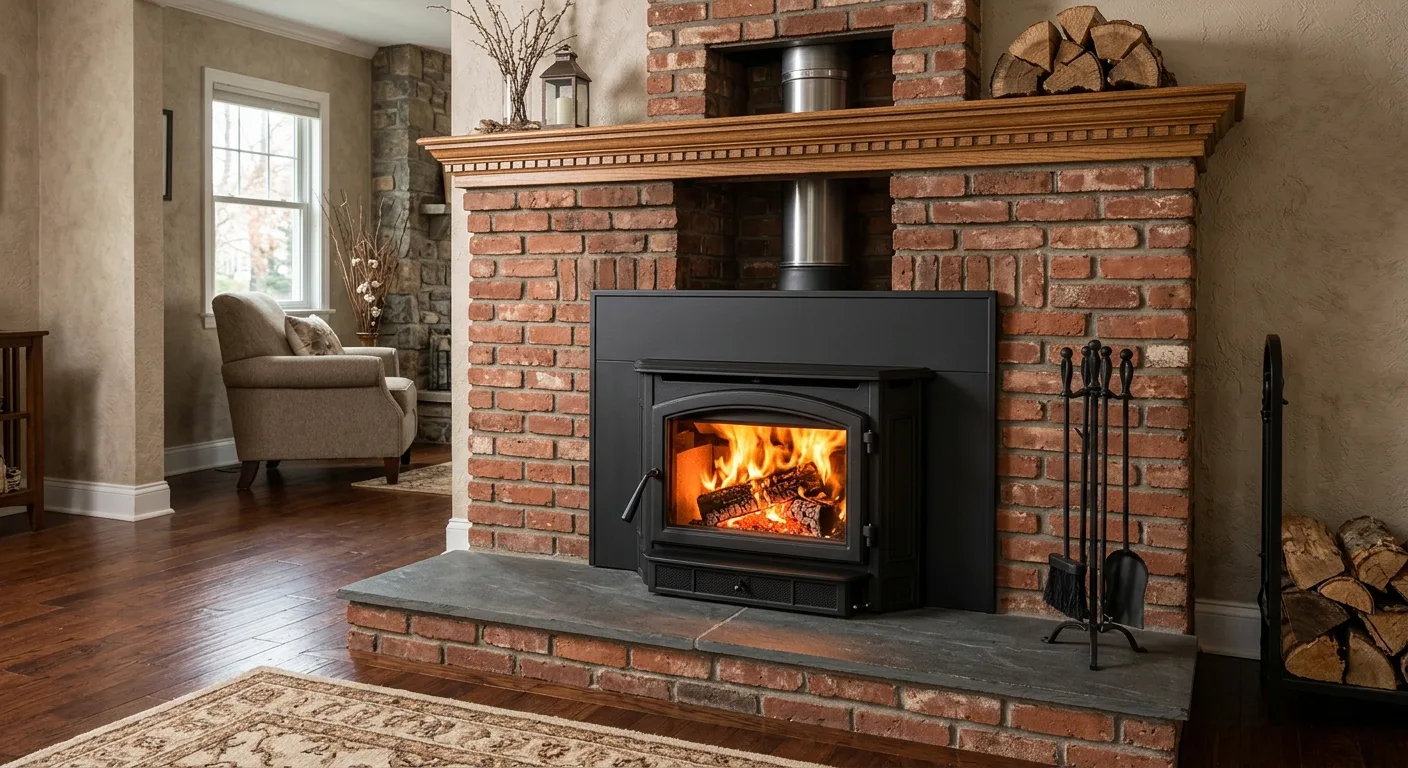
Fireplace insert installation in Hasbrouck Heights is what Apex Pro Chimney Solution handles from start to finish, unit selection, flue assessment, liner installation, and final code compliance, all under one phone call to John Daraio at (551) 755-0325. A traditional open-hearth fireplace loses as much as 90% of its heat up the chimney; a properly installed insert can recover most of that. The reason to call now is straightforward: an insert dropped into a flue that hasn't been inspected first is a carbon monoxide risk. We run the chimney inspection before anything else, and we don't skip it.
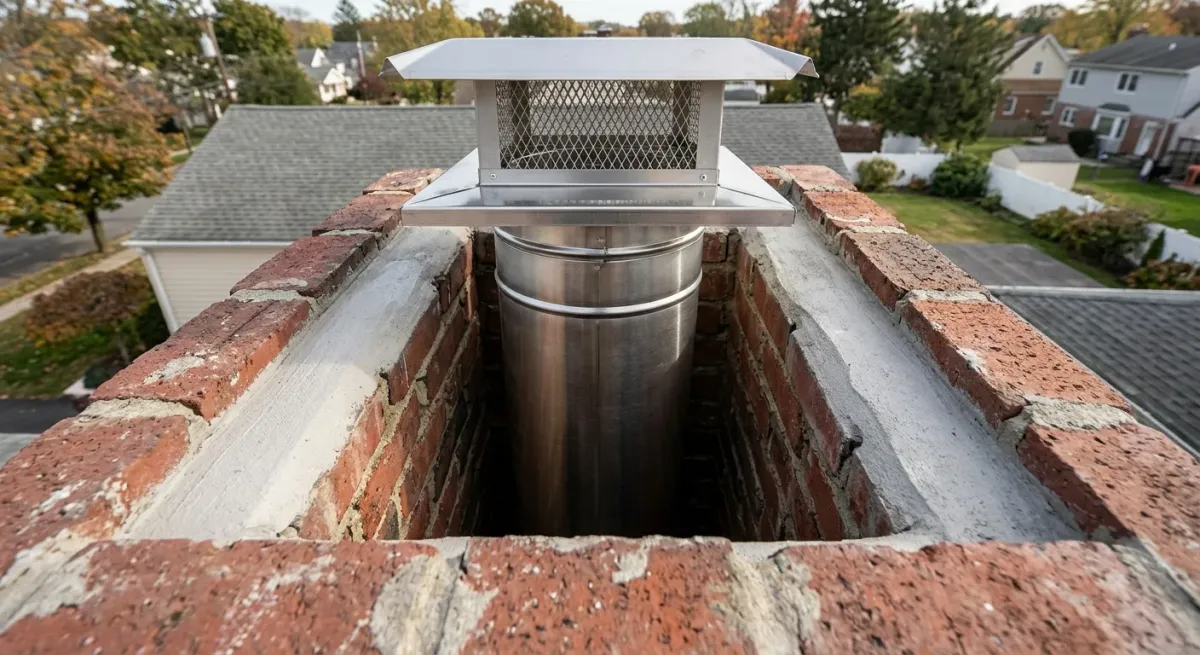
The installation process itself starts with a flue size check, liner condition assessment, and a review of your home's draft characteristics. Many Hasbrouck Heights homes were built in the 1950s and 1960s, and their clay-tile-lined flues were sized for open-combustion fireplaces, not the tighter clearances an insert demands. If the existing liner isn't rated for the insert's BTU output or flue gas temperature, we install a custom-fit stainless steel liner before the unit goes in.
That liner is what keeps combustion gases moving cleanly out of the home and what determines whether the insert operates at its stated efficiency rating. The scope of that liner work, along with the insert type (wood-burning, gas, or electric) and the size of the firebox opening, are the primary cost drivers. Every job is different, contact Apex Pro Chimney Solution for an accurate estimate.
Inspection Before Installation: No Exceptions
The condition of your existing flue determines everything about how the insert performs.
Flue Diameter Check
Insert manufacturers specify a minimum and maximum flue diameter for each unit. We measure your existing flue and cross-reference it against the insert specs before any work begins. An oversized flue produces weak draft; an undersized one creates dangerous back-pressure.
Liner Condition Assessment
Clay tile liners crack over decades of thermal cycling. We examine the liner for spalling, offset joints, and deterioration that would allow combustion gases to seep into the chase wall. If we find it, the liner gets replaced, not patched.
Draft and Downdraft Testing
Some Bergen County homes have persistent downdraft problems that an insert won't automatically cure. We test ambient draft before installation so you know whether a chimney fan or cap upgrade is also part of the solution.
Firebox Opening Dimensions
The insert has to fit the firebox opening within a tight tolerance, typically within half an inch on each face dimension. We take precise measurements so the unit you select goes in cleanly and the surround panels cover the original masonry without gaps.
THE PROCESS
How a Fireplace Insert Gets Installed
Assess and Prepare
We inspect the firebox, flue, and liner. If the liner requires replacement, a custom-sized stainless steel liner is measured, fabricated, and installed down the flue before the insert arrives on site. The chimney cleaning happens here too, creosote and debris come out before the new unit goes in.
Set the Insert and Connect Venting
The insert slides into the firebox on its own frame, and the connector pipe routes combustion gases directly into the new stainless liner. Gas inserts get a rigid or flexible gas line connection, pressure-tested before operation. Every connection point is sealed to prevent flue gas from escaping into the room.
Final Check and Walkthrough
We verify draft performance, test the blower, and confirm that the surround panels and trim cover the original masonry opening without smoke gaps. Then we walk you through operating the unit, the blower controls, and the maintenance schedule. We don't leave until the first fire is running correctly.
Wood, Gas, or Electric: Which Insert Is the Right Call
Wood-burning inserts deliver the highest BTU output and are the best fit for homeowners who already have a wood supply and want to reduce heating costs significantly during Bergen County winters. The trade-off is cleaning frequency: a wood insert needs a flue cleaning at least once a season, and creosote accumulation in the smoke chamber is real. Gas inserts, either natural gas or propane, are cleaner burning and easier to operate, but they require a gas line run to the firebox and a CO detector on the same floor.
Ventless gas inserts burn without a flue connection and are legal in New Jersey with proper room-size calculations, but honestly, we'd encourage you to think carefully about ventless in a tightly sealed modern home: moisture and combustion byproducts go somewhere, and that somewhere is your living room. Electric inserts avoid all venting questions and go into any firebox opening, but they don't heat a room the way a vented unit does. There's no single right answer, the right insert depends on your existing flue, your gas availability, and how much heat output you actually need.
NJ CODE
Permits and Code Requirements in New Jersey
Fireplace insert installation in NJ requires permits in most municipalities. Here's what applies in Hasbrouck Heights.
Building Permit Required
Any fireplace insert installation in Hasbrouck Heights requires a building permit through the borough's Construction Office. Gas appliance connections require a separate mechanical permit. We coordinate with the local building department on scope of work documentation.
NJ UCC Compliance
New Jersey's Uniform Construction Code governs fireplace and venting installations statewide. Insert installations must meet clearance-to-combustibles requirements and use materials listed for the specific appliance. We install to UCC standards on every job.
CO Detector Placement
NJ law requires carbon monoxide detectors within 10 feet of every sleeping area in a home with a fuel-burning appliance. A gas insert triggers this requirement. If your existing detectors don't meet current placement rules, that needs to be resolved before final inspection.
Final Inspection by Municipal Inspector
Hasbrouck Heights requires a final inspection by a certified building inspector after installation. We schedule the inspection, make sure the install is ready to pass, and are available on-site if the inspector has questions. You don't have to navigate that process alone.
What Makes an Insert Installation Go Wrong
Most insert problems trace back to shortcuts taken during installation, not the unit itself.
A flex liner that's the wrong diameter for the insert's BTU rating. A gas connection that wasn't pressure-tested. A surround that was caulked instead of properly sealed. These aren't small details. They're the difference between an efficient heat source and a chimney fire or CO leak.
John Daraio handles Apex Pro installs personally. We don't subcontract the liner work to a different crew and hope the measurements match. If a chimney repair is needed before the insert can go in safely, we tell you upfront. Not after the unit is already on your floor.
-
Liner sized to the insert's rated BTU output
not the original firebox dimensions
-
Every gas connection pressure-tested before operation
no assumptions on new line runs
-
Surround panels sealed to prevent smoke infiltration
not caulked and called done
Start here
Schedule Your Insert Installation Assessment
Call John directly at (551) 755-0325 to describe your existing fireplace and discuss which insert type fits your home. We serve Hasbrouck Heights and Bergen County towns including Lyndhurst, Rutherford, Saddle Brook, and Little Ferry.
Call or text(551) 755-0325Or send it in writing
Three fields, thirty seconds
Frequently asked questions
Fireplace Insert Questions, Answered
Does my flue need a new liner before a fireplace insert can be installed?
Almost always, yes. Inserts route combustion gases through a liner that connects directly to the unit's exhaust collar, and that liner has to be sized to the insert's specifications. Most existing clay-tile flues in older Hasbrouck Heights homes are either the wrong diameter or too deteriorated to use as-is. We assess this during the inspection phase before any purchasing decision is made.
Can a gas insert be installed in a wood-burning fireplace?
Yes, with conditions. The firebox dimensions have to fit the gas insert's face dimensions, a gas line has to be available or run to the firebox, and the flue has to be properly lined for gas appliance use. Gas inserts produce cooler exhaust than wood, so the liner requirements differ. We verify all three before recommending a unit.
How long does a typical fireplace insert installation take?
For a straightforward gas insert with an existing usable flue, plan on one full day. If the liner requires replacement, which is common in homes built before 1970, add another half day to a full day depending on the flue height. Jobs that require masonry work around the firebox opening take longer. We'll give you a realistic timeline after the initial assessment.
Are ventless gas fireplace inserts legal and safe in New Jersey?
Ventless gas appliances are legal in New Jersey under specific conditions, including room volume calculations and the presence of a functioning oxygen depletion sensor (ODS) built into the unit. They're not suitable for every home, particularly smaller rooms or tightly sealed new construction. We'll tell you honestly whether a ventless unit makes sense for your specific space rather than just selling you what's easiest to install.
What is the difference between a fireplace insert and a freestanding wood stove?
A fireplace insert is designed to slide into an existing masonry or prefab firebox opening, using the existing chimney for venting. A freestanding stove sits on its own base and requires either a dedicated flue or a separately constructed chase. Inserts are the right choice when an existing fireplace is already in place. If you're adding a stove to a room without a fireplace, that's a different scope.
Does a fireplace insert installation require a permit in Hasbrouck Heights?
Yes. Both the installation of the insert itself and any gas line work require permits through the Hasbrouck Heights Construction Office. A final inspection by a municipal building inspector is required before the appliance can be used. We handle the permit documentation and are available on-site for the inspection.
Ready to Replace That Drafty Fireplace?
A well-installed insert pays for itself in reduced heating costs. A poorly installed one is a liability.
Related
Next step
Tell us about the job
Your name, your number and what needs doing. A person from Apex Pro Chimney Solution gets back to you.
- Send the detailsYour name, your number and what needs doing.
- John gets back to youA person, not a call center.
- On-site assessmentThe chimney is checked before any work starts.
Request an estimate
No obligation