Hasbrouck Heights Local
Chimney Downdraft Repair in Hasbrouck Heights
Smoke in your living room is a diagnostic problem, not a cosmetic one, we find the cause and fix it.
A Chimney Company You Can Trust
- Owner-operatedJohn Daraio
- 7Chimneyservices
- 50Townson the route
- Hasbrouck HeightsNJ · home base
Chimney Downdraft Repair
Diagnosing Downdraft in Hasbrouck Heights Homes
Chimney downdraft repair in Hasbrouck Heights is exactly what Apex Pro Chimney Solution does. We diagnose why your flue is pulling air in instead of pushing it out, then we fix the actual cause, not just the symptom. If smoke is rolling back into your living room, cold air is pouring down your fireplace throat on winter mornings, or you're catching that faint carbon smell even when nothing is burning, that's a pressure problem inside your flue. Call John directly at (551) 755-0325 before it gets worse.
Downdraft isn't one thing. It's a category of draft failures that each requires a different fix, and the diagnostic step is what separates a lasting repair from a temporary patch. Bergen County homes, especially pre-1970 masonry construction common in Hasbrouck Heights, were built when air sealing standards were minimal. As those homes have been weatherized over the decades, original single-flue chimneys that relied on natural infiltration to sustain draft now struggle.
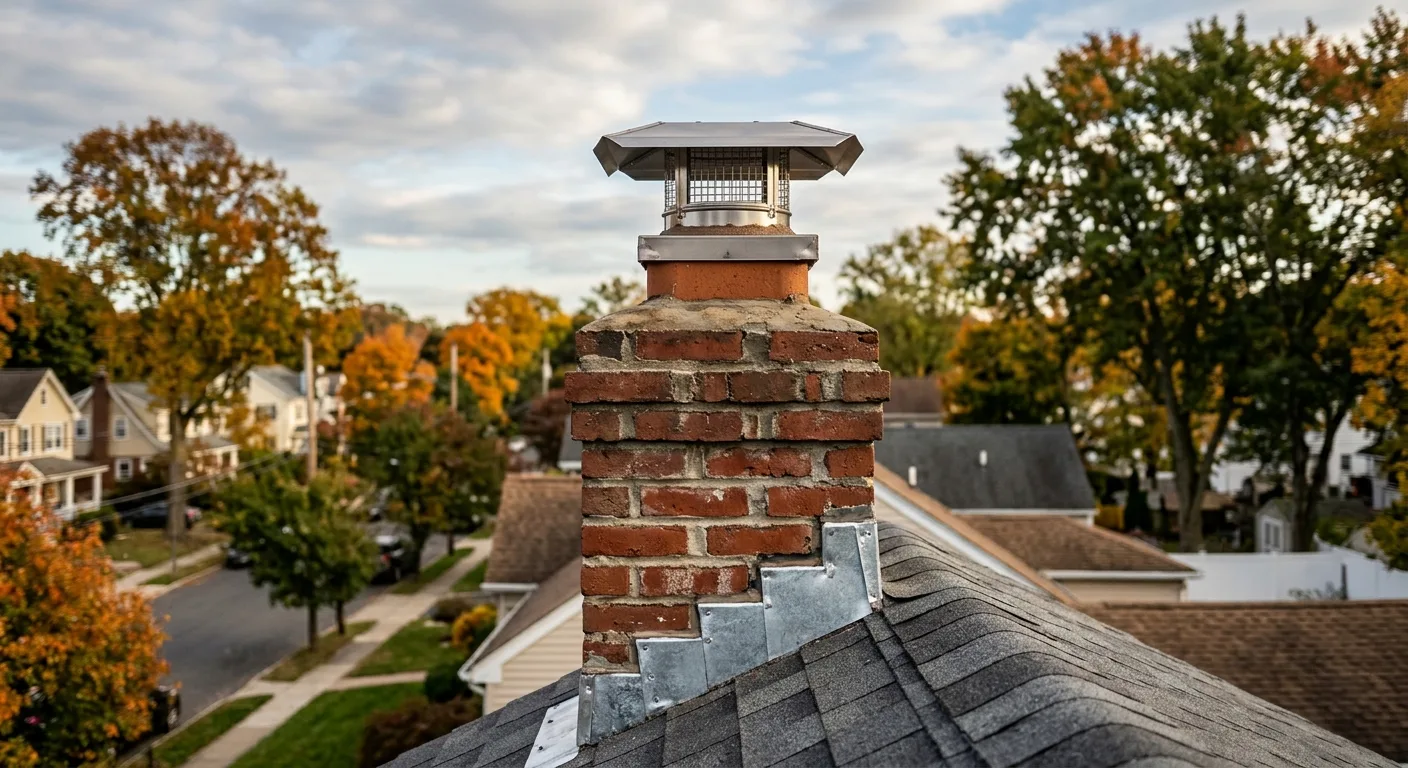
Wind patterns off the Meadowlands and pressure differentials on cold, still January nights make it worse. The repair scope depends entirely on what we find: a chimney rain cap installation solves wind-induced downdraft; a relining job addresses a flue that's too large for the appliance; a chimney fan installation handles persistent negative pressure that caps and dampers can't correct alone. Every job is different, contact Apex Pro Chimney Solution for an accurate estimate.
Why Downdraft Happens in North Jersey
The cause is almost never what homeowners assume.
Most people blame the weather when smoke backs up into the house. Weather is a factor, but it's rarely the whole story. In Hasbrouck Heights and across Bergen County, we see downdraft trace back to a few specific conditions that the area's housing stock makes worse. Tight modern weatherstripping cuts off the makeup air a working fireplace needs. A chimney that was sized for an original wood-burning insert often can't sustain proper draft once a gas appliance is installed inside a larger flue.
And roofline changes, additions, dormers, even a new ridge vent installed by a roofer, can create wind shadows that force air down the flue rather than drawing it up. The proximity to the Hudson River corridor means winter pressure differentials here are sharper than in inland parts of New Jersey. None of those conditions fix themselves. A chimney inspection is the right starting point, we assess flue height, diameter, liner condition, and appliance match before recommending anything.
WHAT WE CHECK
The Downdraft Diagnostic Process
We don't guess at the cause, we measure for it.
Flue Height and Clearance
A flue that doesn't clear the roofline by the required margin will pull air down in certain wind conditions. We measure actual height against roof pitch and any obstructions on site.
Flue Diameter vs. Appliance Size
An oversized flue relative to the firebox opening is one of the most common, and most overlooked, downdraft causes. We calculate the cross-sectional ratio on every inspection.
Liner Condition
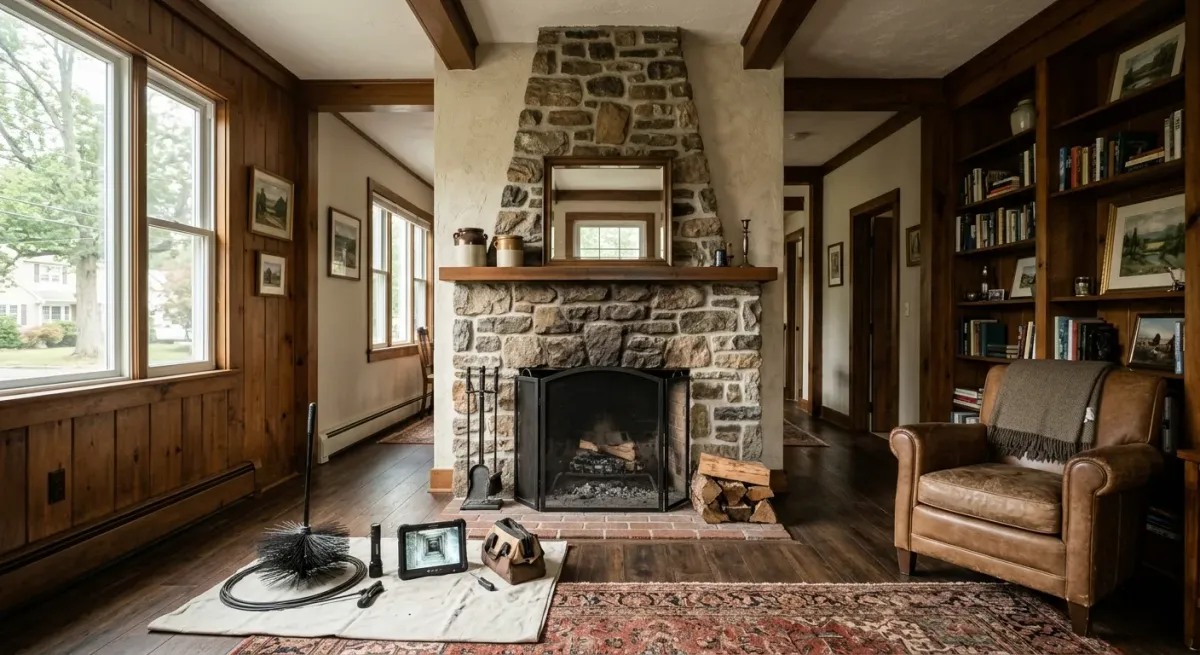
Cracks, blockages, or a missing liner change how air moves through the flue. We check liner integrity as part of every downdraft diagnosis because a compromised liner can disrupt draft even when everything else is sized correctly.
Makeup Air Availability
Tightly sealed modern homes depressurize when exhaust fans run. That negative pressure pulls air from wherever it can, including down your chimney. We check whether the home's envelope is starving the fireplace of combustion air.
Cap and Crown Condition
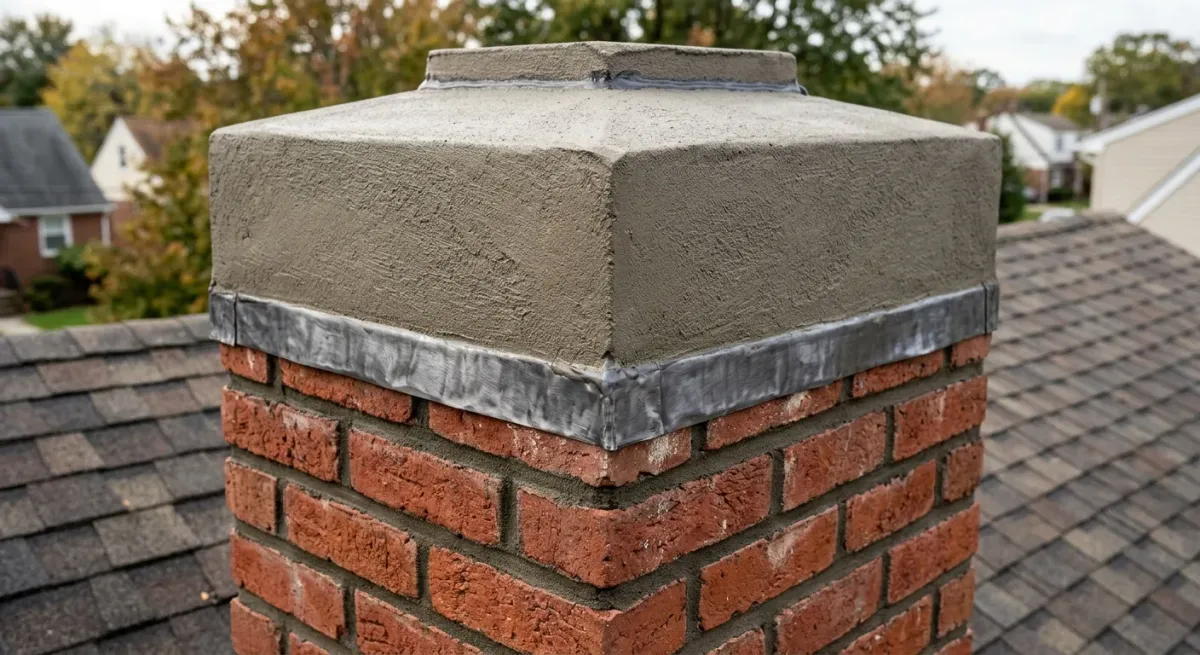
A missing, damaged, or wrong-profile cap lets wind drive directly into the flue opening. We check cap type against your roofline geometry and replace it if the profile is contributing to the problem.
Damper Operation
A warped or corroded damper that doesn't seal fully lets cold air fall into the firebox when the system is off, and it creates turbulence that can disrupt draft when it's open. We test damper travel and seating on every visit.
THE FIX
Downdraft Solutions We Install
Caps, fans, liners, and dampers each solve different conditions.
Cap or Top-Sealing Damper
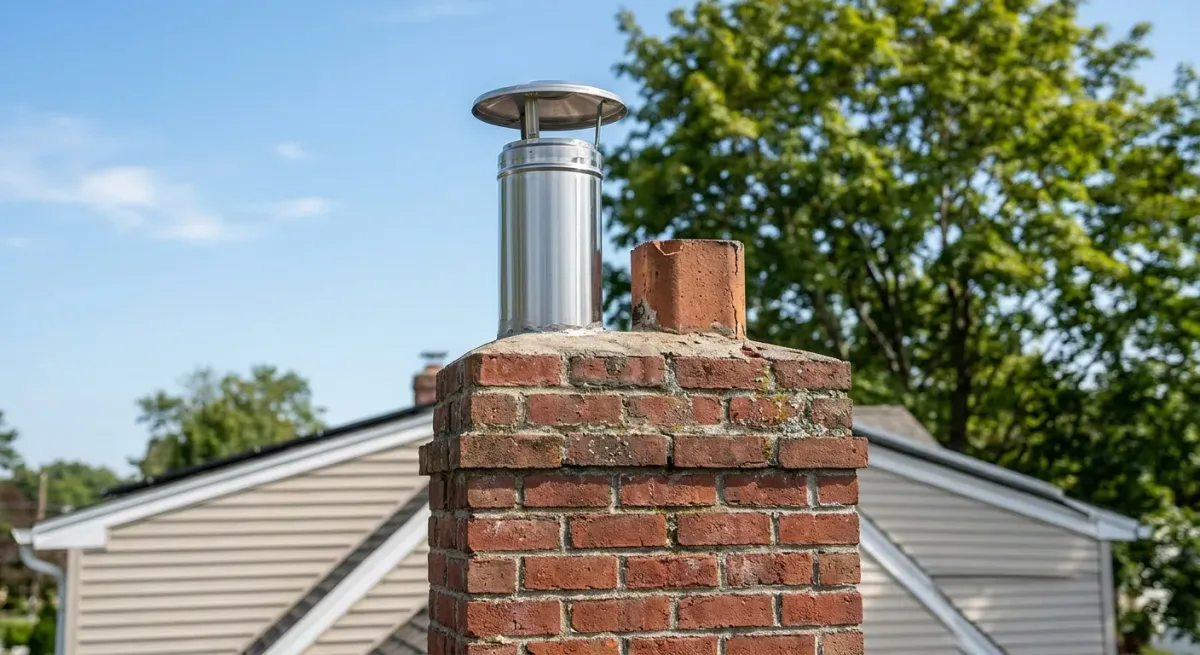
The first line of defense for wind-driven downdraft. A correctly profiled cap deflects prevailing wind; a top-sealing damper eliminates cold-air infiltration when the fireplace is idle. Often the fix for homes with roofline exposure or a history of animal entry.
Powered Chimney Fan
When passive solutions can't overcome chronic negative pressure, a chimney fan mounted at the flue terminal creates consistent upward draft regardless of exterior wind conditions. It's the right call for homes that have already had caps installed without relief.
Flue Relining
If the flue diameter is wrong for the appliance, no cap or fan will fix the underlying problem permanently. We reline the flue to the correct size for the heat output of your insert or fireplace, this also brings older chimneys into current code compliance.
What Happens If You Ignore Downdraft
Honestly, this is the part most contractors skip because it's uncomfortable to say directly. Persistent downdraft is a carbon monoxide risk. A flue that reverses under pressure doesn't just bring smoke into the house. It can backdraft combustion gases from a gas appliance, including a furnace or water heater that shares a flue with your fireplace in some older Bergen County configurations. We've found that homeowners assume a little smoke is a nuisance.
Sometimes it is. But the only way to know whether it's also a CO hazard is to run a proper draft test. Don't wait until a detector goes off. A chimney cleaning visit and draft test together give you that answer. If you're in Wood Ridge, Elmwood Park, or Carlstadt, the housing vintage is similar. The risk profile is the same.
Does Homeowners Insurance Cover Downdraft Repair?
The short answer is: sometimes, and only under specific conditions.
Insurance coverage for chimney downdraft repair depends on what caused the failure and how your policy is written. Sudden damage from a storm, a cap blown off, a crown cracked by an ice event, is more likely to be covered under a standard homeowners policy than gradual deterioration. Wear and maintenance failures are almost universally excluded.
If you've had a recent weather event and you're now experiencing downdraft, document it and call your insurer before scheduling any work. We can provide documentation of conditions found during inspection. What we won't do is inflate a scope or sign off on conditions we didn't find. That's not how we work. For a chimney repair that follows an insurance claim, we'll give your adjuster a straight account of what's there.
Downdraft Repair: What the Diagnostic Covers
Every downdraft service call includes a structured diagnostic before any repair is quoted.
-
Flue height and roofline clearance measurement
Checked against current code and site-specific wind exposure
-
Flue-to-firebox ratio check
We calculate whether the flue diameter matches the appliance output
-
Liner integrity assessment
Visual inspection and draft test to detect blockages or breaches
-
Makeup air evaluation
We assess whether the home's envelope is depressurizing and starving draft
Smoke Coming In? Call John Now.
Frequently asked questions
Answers to your most common questions
What causes chimney downdraft and how is it diagnosed?
Downdraft occurs when the pressure differential between your flue and the outside air reverses, pushing combustion gases back into the living space instead of exhausting them. Common causes include an oversized flue diameter relative to the firebox, insufficient flue height above the roofline, a missing or wrong-profile rain cap, and house depressurization from tight weatherstripping. We diagnose it by measuring flue geometry, testing draft with the appliance operating, and evaluating makeup air availability inside the home.
Why is cold air coming down my chimney even when it's not in use?
A cold-air column sitting in an uninsulated masonry flue is denser than the warm air inside your home, so it naturally falls through the open damper. If your damper doesn't seal fully, common with cast-iron throat dampers in older Bergen County homes that have warped or corroded, that cold column pushes through even when the damper appears closed. A top-sealing damper installed at the flue crown is the most effective fix; it eliminates the air column entirely rather than trying to block it mid-flue.
What's the difference between a downdraft cap and a powered chimney fan for fixing the problem?
A downdraft cap is passive: it deflects prevailing wind away from the flue opening so external pressure can't drive air downward. It works well when wind direction is the primary cause. A powered chimney fan actively creates upward draft by drawing air out of the flue mechanically, which is necessary when the problem is house depressurization or an appliance that can't generate sufficient draft on its own. We recommend the simpler solution first, but when caps fail to resolve the issue, a fan is the right tool.
Can chimney downdraft damage my appliances or create a carbon monoxide risk?
Yes, on both counts. Persistent backdraft from a gas appliance, furnace, boiler, or gas insert, can pull flue gases including carbon monoxide back into the living space. Beyond the CO risk, reversed draft that carries moisture and combustion byproducts down through the firebox accelerates deterioration of the firebox liner, damper, and smoke shelf. If your CO detector has alarmed near the fireplace, treat that as an emergency and don't use the appliance again until the flue is inspected.
How does Bergen County's winter weather make downdraft worse?
The Hudson River corridor and proximity to the Meadowlands create sharp pressure differentials during cold, still weather, conditions where chimneys that draft acceptably in mild weather fail. When a strong northwest wind hits a chimney that doesn't clear the roofline by the required margin, it creates a low-pressure zone directly over the flue opening that actively pulls air down. Pre-1970 single-flue chimneys in Hasbrouck Heights were designed for houses that leaked air freely; once those homes are properly weatherized, the draft math changes entirely.
Will homeowners insurance pay for chimney downdraft repair?
Coverage depends on the cause of damage and your policy language. Storm-related damage, a cap destroyed by wind, a crown cracked by ice, is more commonly covered than wear and deterioration. Maintenance failures are nearly always excluded. If a weather event preceded the downdraft problem, document the event, contact your insurer before any work begins, and request a written scope from us that your adjuster can review. We don't overstate findings to support claims, but we'll document exactly what we find.
Do I need a chimney inspection before a downdraft repair, or can you go straight to the fix?
The inspection is the repair, in a diagnostic sense. Downdraft has multiple causes, and applying a fix without identifying the correct cause wastes your money. A cap won't help if the problem is a flue that's twice the diameter it should be. A fan won't help if the issue is a cracked liner disrupting laminar airflow. We run the full diagnostic first, explain what we found, then quote the specific repair. Skipping that step is how homeowners end up with three visits from three different contractors and still have smoke in the house.
Related
Next step
Tell us about the job
Your name, your number and what needs doing. A person from Apex Pro Chimney Solution gets back to you.
- Send the detailsYour name, your number and what needs doing.
- John gets back to youA person, not a call center.
- On-site assessmentThe chimney is checked before any work starts.
Request an estimate
No obligation